
Picture this: it’s 5 AM, you’ve had three hours of sleep, and you’re facing a day that demands peak performance. Regular coffee just won’t cut it. Enter the red eye coffee – a powerhouse beverage that’s become the secret weapon of sleep-deprived professionals, students, and anyone who needs an extra caffeine kick to power through their day.
What is a red eye coffee? Simply put, it’s a regular cup of drip coffee with a shot of espresso added to it. This combination creates one of the most caffeinated coffee drinks available, delivering roughly 200-300mg of caffeine per serving – nearly double what you’d get from a standard cup of coffee.
Key Takeaways
• Red eye coffee combines drip coffee with espresso for maximum caffeine content (200-300mg per serving)
• Perfect for high-energy situations like early mornings, long work sessions, or recovering from late nights
• Simple to make at home with basic coffee equipment – no special barista skills required
• Offers unique flavor complexity by blending two different coffee brewing methods
• Part of a family of similar drinks including black eye (double shot) and dead eye (triple shot) variations
The Origins and History of Red Eye Coffee
The red eye coffee gets its distinctive name from the “red-eye flights” – those overnight flights that leave passengers with bloodshot, tired eyes upon arrival. Just as these flights became synonymous with exhaustion and the desperate need for energy, the red eye coffee emerged as the perfect remedy for the sleep-deprived.
Here’s the thing – this drink didn’t originate in some fancy Italian café or trendy coffee shop. It was born out of pure necessity in American diners and truck stops during the 1990s. Long-haul truckers, night shift workers, and business travelers needed something stronger than regular coffee but didn’t want to wait for multiple espresso shots.
The beauty of the red eye lies in its simplicity and effectiveness. Unlike complicated coffee drinks that require extensive training to master, anyone can make a red eye coffee. It represents the practical, no-nonsense approach to caffeine consumption that Americans have embraced.
Cultural Impact and Popularity
The red eye coffee has become more than just a beverage – it’s a cultural phenomenon. In coffee shops across the country, ordering a “red eye” signals that you’re serious about your caffeine intake. It’s the drink of choice for:
- Medical residents pulling 24-hour shifts
- College students during finals week
- Entrepreneurs working around the clock on their startups
- Parents dealing with newborn sleep schedules
The drink has also inspired countless variations and spawned an entire family of high-caffeine coffee beverages, each with increasingly dramatic names that reflect their potency.
Red Eye Coffee Ingredients and Composition
Let’s break down exactly what goes into this powerhouse beverage and why it’s so effective at delivering that much-needed energy boost.
Primary Ingredients
Drip Coffee (Base)
The foundation of any red eye coffee is a standard cup of drip coffee, typically 8-12 ounces. This provides:
- 95-165mg of caffeine depending on the coffee strength and serving size
- Rich, familiar flavor that most coffee drinkers enjoy
- Smooth texture that balances the intensity of the espresso
Espresso Shot (The Kick)
Added to the drip coffee is one shot of espresso, which contributes:
- 63-75mg of additional caffeine
- Concentrated flavor with notes of crema and intensity
- Aromatic complexity that elevates the overall drink profile
The Science Behind the Combination
The genius of the red eye coffee lies in how these two brewing methods complement each other. Let’s be real – you’re not just adding caffeine; you’re creating a completely new flavor experience.
Drip coffee extracts different compounds from coffee beans compared to espresso. The longer brewing time (4-6 minutes) allows for:
- More complete extraction of coffee oils
- Balanced acidity levels
- Smoother, less intense flavor notes
Espresso, brewed under high pressure in 25-30 seconds, provides:
- Concentrated flavors and aromatics
- Higher concentration of dissolved solids
- The signature crema that adds texture
When combined, these brewing methods create a drink that’s greater than the sum of its parts.
Caffeine Content Breakdown
| Component | Caffeine Content | Percentage of Total |
|---|---|---|
| 8oz Drip Coffee | 95-165mg | 60-70% |
| 1 Espresso Shot | 63-75mg | 30-40% |
| Total Red Eye | 158-240mg | 100% |
For comparison, this puts red eye coffee in the same caffeine range as energy drinks, but with the added benefit of coffee’s natural antioxidants and the satisfaction of a warm, flavorful beverage.
How to Make the Perfect Red Eye Coffee at Home
Creating an exceptional red eye coffee doesn’t require expensive equipment or barista-level skills. With the right technique and attention to detail, you can craft a coffee shop-quality drink in your own kitchen.
Essential Equipment
For the Drip Coffee:
- Coffee maker (drip, pour-over, or French press)
- Coffee grinder (burr grinder preferred)
- Digital scale for precise measurements
- Quality coffee beans
For the Espresso:
- Espresso machine, moka pot, or AeroPress
- Espresso beans or dark roast coffee
- Tamper (if using espresso machine)
Step-by-Step Brewing Guide
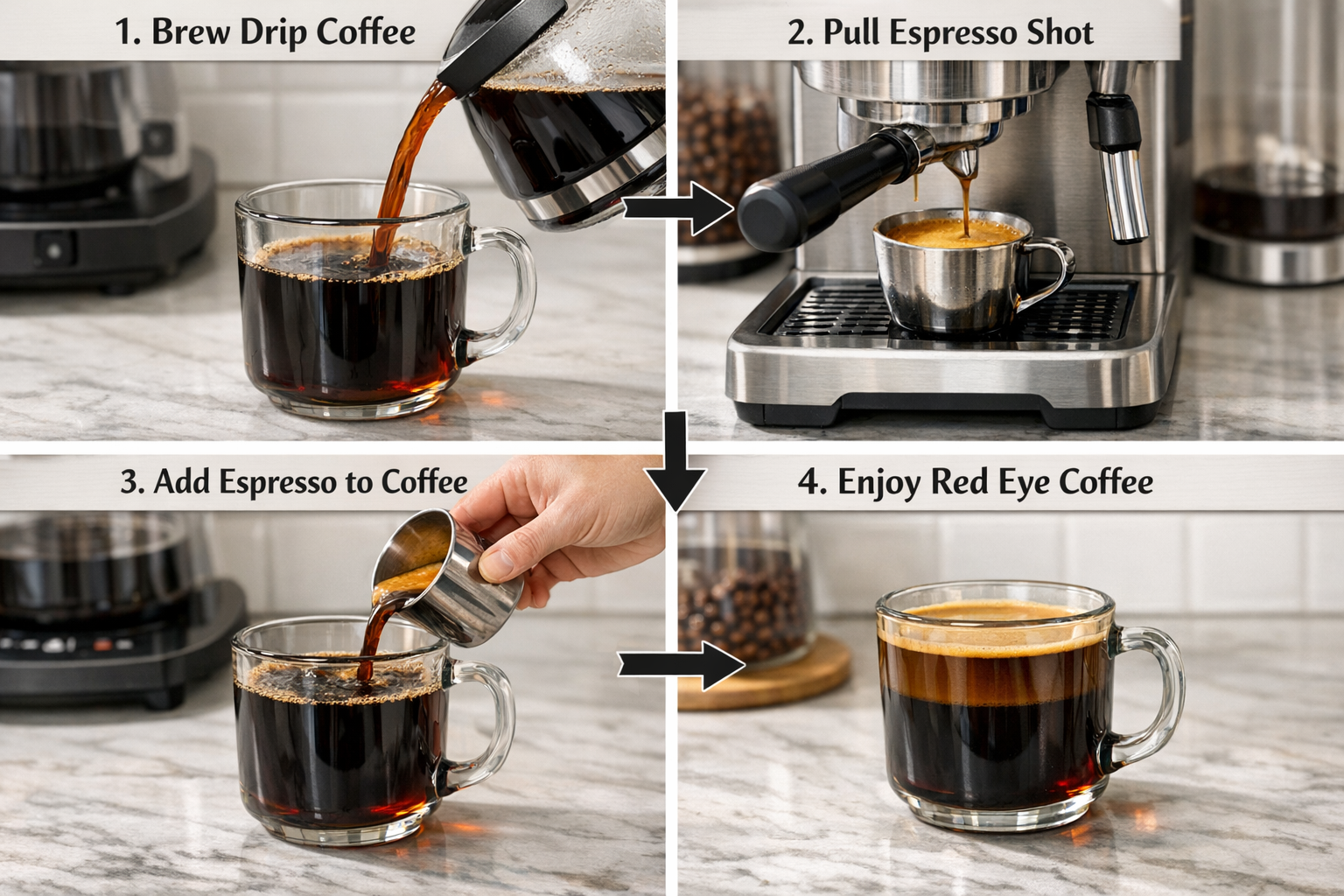
Step 1: Prepare Your Drip Coffee
- Measure your coffee: Use a 1:15 to 1:17 ratio (coffee to water)
- Grind fresh: Medium grind for drip coffee
- Brew at optimal temperature: 195-205°F (90-96°C)
- Time it right: 4-6 minutes for most drip methods
Step 2: Pull Your Espresso Shot
- Grind fine: Espresso requires a fine, consistent grind
- Dose properly: 18-20 grams for a double shot
- Tamp evenly: Apply 30 pounds of pressure
- Extract in 25-30 seconds: Aim for 1.5-2 ounces of liquid
Step 3: Combine and Serve
- Pour the espresso directly into the hot drip coffee
- Stir gently to integrate the flavors
- Serve immediately while both components are hot
Pro Tips for Excellence
Coffee Selection Matters
- Choose complementary flavor profiles for your drip coffee and espresso
- Medium roast drip coffee pairs well with dark roast espresso
- Consider single-origin coffees for unique flavor combinations
Timing Is Everything
- Brew both components simultaneously when possible
- Never let coffee sit for more than 30 minutes before combining
- Serve immediately after preparation for best flavor
Customization Options
- Adjust the ratio: More espresso for stronger caffeine kick
- Try different origins: Ethiopian drip with Colombian espresso
- Temperature control: Ensure both components are equally hot
Common Mistakes to Avoid
❌ Using pre-ground coffee: Always grind fresh for maximum flavor
❌ Wrong water temperature: Too hot burns the coffee, too cool under-extracts
❌ Poor timing: Letting either component cool before combining
❌ Incorrect ratios: Too much espresso can overpower the drip coffee
❌ Low-quality beans: The drink is only as good as your ingredients
Red Eye Coffee vs Other High-Caffeine Drinks- What Makes It Special
In a world filled with energy drinks, pre-workout supplements, and caffeine pills, you might wonder what makes red eye coffee stand out. The answer lies in its unique combination of natural ingredients, complex flavors, and sustained energy delivery.
Comparing Caffeine Sources
| Beverage | Caffeine Content | Key Characteristics |
|---|---|---|
| Red Eye Coffee | 200-300mg | Natural, sustained energy, complex flavors |
| Energy Drinks | 80-300mg | Added sugars, artificial ingredients, quick spike |
| Espresso (Double) | 126-150mg | Intense flavor, quick consumption, shorter duration |
| Cold Brew | 150-238mg | Smooth, less acidic, slower caffeine release |
| Pre-Workout | 150-400mg | Artificial stimulants, designed for exercise |
The Natural Advantage
Here’s what sets red eye coffee apart: it’s made entirely from natural coffee beans without artificial stimulants, excessive sugars, or synthetic additives. This means:
Sustained Energy Release
- Coffee’s natural caffeine absorbs more slowly than synthetic alternatives
- No crash typical of energy drinks with high sugar content
- Steady energy for 4-6 hours rather than a quick spike and crash
Health Benefits
- Rich in antioxidants from coffee beans
- Lower calorie count compared to most energy drinks
- No artificial preservatives or chemical additives
- Supports metabolism through natural coffee compounds
Flavor Complexity
Unlike energy drinks that rely on artificial flavors, red eye coffee offers:
- Nuanced taste profiles from different coffee origins
- Natural sweetness from coffee’s inherent flavors
- Aromatic experience that enhances the drinking ritual
- Customizable intensity based on coffee and espresso choices
When to Choose Red Eye Coffee
Ideal Situations:
- Early morning meetings when you need to be sharp and focused
- Long work sessions requiring sustained concentration
- Recovery from poor sleep without relying on artificial stimulants
- Cold weather when you want warmth along with caffeine
- Social coffee settings where you need extra energy but want to enjoy the experience
Consider Alternatives When:
- You need immediate energy for physical exercise (pre-workout might be better)
- You’re sensitive to coffee acidity (cold brew could be gentler)
- You want portable convenience (energy drinks are more travel-friendly)
- You prefer sweet flavors (flavored energy drinks might appeal more)
The Ritual Factor
Let’s be real – part of what makes red eye coffee special isn’t just the caffeine content. It’s the ritual of preparation and consumption. Unlike chugging an energy drink, drinking red eye coffee is:
- Mindful and deliberate – you savor the experience
- Socially acceptable in professional settings
- Customizable to your exact preferences
- Part of coffee culture rather than just fuel consumption
This ritualistic aspect actually enhances the psychological benefits of caffeine, making you feel more alert and focused through both chemical and behavioral conditioning.
Health Considerations and Safety Guidelines
While red eye coffee can be an excellent tool for boosting energy and focus, it’s important to understand the health implications of consuming high levels of caffeine and how to do so safely.
Understanding Caffeine Tolerance and Limits
Recommended Daily Limits
According to the FDA, healthy adults should limit caffeine intake to 400mg per day. A single red eye coffee can contain 200-300mg, which means:
- One red eye represents 50-75% of your daily caffeine allowance
- Maximum of 1-2 red eyes per day for most people
- Space consumption at least 6 hours apart to avoid sleep disruption
Individual Factors Affecting Tolerance
- Body weight: Larger individuals typically tolerate more caffeine
- Genetic factors: Some people metabolize caffeine faster than others
- Regular consumption: Daily coffee drinkers develop higher tolerance
- Age: Caffeine sensitivity often increases with age
- Medications: Some drugs interact with caffeine metabolism
Potential Benefits
Cognitive Enhancement
Research shows that moderate caffeine consumption can:
- Improve focus and concentration for 3-5 hours
- Enhance memory formation and recall
- Increase alertness and reaction time
- Boost mood and reduce feelings of fatigue
Physical Performance
- Increased metabolism by 3-11%
- Enhanced fat burning during exercise
- Improved endurance for physical activities
- Reduced perceived exertion during workouts
Antioxidant Benefits
Coffee is one of the largest sources of antioxidants in the Western diet:
- Chlorogenic acids that may reduce inflammation
- Quinides with potential neuroprotective effects
- Melanoidins that support gut health
Potential Risks and Side Effects
Short-term Effects of Overconsumption
- Jitters and anxiety from too much caffeine
- Rapid heartbeat or palpitations
- Digestive issues including acid reflux
- Headaches from caffeine sensitivity
- Sleep disruption if consumed late in the day
Long-term Considerations
- Caffeine dependence with regular high-dose consumption
- Tolerance buildup requiring more caffeine for same effects
- Withdrawal symptoms when stopping suddenly
- Bone health concerns with excessive caffeine intake
Who Should Avoid or Limit Red Eye Coffee
Medical Conditions Requiring Caution
- Heart conditions including arrhythmias or high blood pressure
- Anxiety disorders that may be exacerbated by caffeine
- Acid reflux or GERD due to coffee’s acidity
- Sleep disorders as caffeine can worsen insomnia
- Pregnancy (limit to 200mg caffeine daily)
Medication Interactions
Consult healthcare providers if taking:
- Blood thinners (caffeine may affect clotting)
- Anxiety medications (may reduce effectiveness)
- Stimulant medications (can compound effects)
- Heart medications (may interact with caffeine)
Safe Consumption Guidelines
Best Practices for Red Eye Coffee
- Start with half portions to assess your tolerance
- Consume before 2 PM to avoid sleep interference
- Stay hydrated – drink water alongside coffee
- Don’t drink on empty stomach to reduce acid irritation
- Monitor your response and adjust accordingly
Signs You Should Cut Back
- Difficulty sleeping even when tired
- Feeling anxious or jittery regularly
- Needing increasing amounts for the same effect
- Experiencing headaches when you don’t have coffee
- Digestive issues or heartburn
The bottom line is this: red eye coffee can be a powerful tool for enhanced performance and energy, but like any potent substance, it requires respect and moderation.
Variations and Related Coffee Drinks
The red eye coffee is just the beginning of a fascinating family of high-caffeine coffee drinks. Each variation offers different levels of intensity and flavor profiles, allowing you to customize your caffeine experience based on your specific needs.
The Eye Family: A Complete Guide
Red Eye (The Original)
- Composition: Drip coffee + 1 shot espresso
- Caffeine: 200-300mg
- Best for: Moderate caffeine boost, first-time high-caffeine drinkers
- Flavor profile: Balanced, approachable
Black Eye (Double the Power)
- Composition: Drip coffee + 2 shots espresso
- Caffeine: 280-380mg
- Best for: Heavy caffeine users, extremely demanding days
- Flavor profile: Intense, espresso-forward
Dead Eye/Dripped Eye (Maximum Intensity)
- Composition: Drip coffee + 3 shots espresso
- Caffeine: 350-450mg
- Best for: Extreme situations only, experienced caffeine consumers
- Flavor profile: Overwhelmingly strong, not for the faint of heart
Green Eye (The Rare One)
- Composition: Drip coffee + 4 shots espresso
- Caffeine: 420-520mg
- Best for: Almost never recommended due to health concerns
- Flavor profile: Extremely bitter, medicinal
Regional Variations and Names
“Shot in the Dark” (Pacific Northwest)
This is essentially the same as a red eye but often made with:
- Darker roast drip coffee for more robust flavor
- Local coffee roasters’ signature blends
- Slightly larger serving sizes (12-16 oz)
“Café Bombón” (Spanish Influence)
A variation that includes:
- Sweetened condensed milk added to the red eye base
- Layered presentation showing coffee and milk separation
- Sweeter flavor profile that balances the intensity
“Turbo Coffee” (Truck Stop Special)
The working person’s version featuring:
- Stronger drip coffee (often French roast)
- Double espresso shots by default
- Larger portions (16-20 oz)
- No-frills presentation focused purely on caffeine delivery
Creative Modifications and Customizations
Seasonal Variations
Winter Red Eye
- Add cinnamon and nutmeg for warming spices
- Include vanilla extract for comfort flavors
- Top with whipped cream for indulgence
- Use dark roast coffees for deeper warmth
Summer Red Eye
- Serve over ice for refreshing consumption
- Add cold brew instead of hot drip coffee
- Include mint or citrus zest for brightness
- Use lighter roasts for more acidic, refreshing notes
Flavor Enhancements
Sweetener Options
- Raw honey for natural sweetness and complexity
- Maple syrup for rich, caramel-like notes
- Brown sugar for molasses undertones
- Stevia for zero-calorie sweetening
Milk and Cream Additions
- Heavy cream for richness without diluting flavor
- Oat milk for creamy texture and subtle sweetness
- Coconut milk for tropical notes
- Almond milk for nutty undertones
Spice and Extract Options
- Cardamom for Middle Eastern flair
- Cocoa powder for chocolate notes
- Orange zest for citrus brightness
- Cayenne pepper for heat and metabolism boost
International High-Caffeine Coffee Traditions
Italian “Caffè Corretto”
While not exactly a red eye, this drink adds:
- Grappa or brandy to espresso for evening consumption
- Higher caffeine concentration through multiple small servings
- Cultural significance as a digestif
Turkish Coffee (Double Strength)
- Extremely fine grind coffee boiled with water
- Sugar added during brewing for integrated sweetness
- Caffeine content similar to red eye when made strong
- Thick, syrupy texture from unfiltered preparation
Ethiopian Coffee Ceremony (Multiple Rounds)
- Three rounds of coffee consumption in succession
- Progressively stronger preparations
- Social and spiritual significance beyond caffeine
- Total caffeine equivalent to red eye when all rounds consumed
Making Your Own Signature Variation
Consider Your Goals
- Maximum caffeine: Go with black eye or dead eye
- Balanced flavor: Stick with traditional red eye
- Unique taste: Experiment with spices and extracts
- Dietary restrictions: Modify milk and sweetener choices
Experimentation Framework
- Start with classic red eye as your baseline
- Change one variable at a time (coffee origin, milk type, etc.)
- Document your preferences to refine your recipe
- Consider the occasion (work vs. leisure, season, time of day)
- Share and get feedback from fellow coffee enthusiasts
You’ve got this – creating your perfect high-caffeine coffee drink is about understanding the fundamentals and then personalizing based on your unique preferences and needs.
When and Why to Choose Red Eye Coffee
Understanding when to reach for a red eye coffee versus other caffeine options can make the difference between optimal performance and caffeine overload. Let’s explore the specific situations where this powerhouse drink truly shines.
Optimal Timing for Red Eye Coffee Consumption
Early Morning Scenarios (5 AM – 8 AM)
Red eye coffee excels during early morning hours because:
- Your cortisol levels are naturally rising, syncing well with caffeine
- Long day ahead requires sustained energy rather than quick bursts
- Mental clarity needs are highest for morning decision-making
- Social acceptability is high in professional morning settings
Pre-Performance Situations
Consider red eye coffee 30-45 minutes before:
- Important presentations or client meetings
- Exam periods requiring extended focus
- Creative projects needing sustained mental energy
- Long driving trips for alertness and safety
Recovery Scenarios
Red eye coffee works exceptionally well for:
- Post-red-eye flight recovery (living up to its name)
- After poor sleep when you still need to perform
- Shift work transitions between different schedules
- Post-illness energy restoration when you’re cleared but tired
Situational Decision-Making Guide
Choose Red Eye Coffee When:
✅ You need 4-6 hours of sustained energy
- Long work sessions
- Extended study periods
- Day-long conferences or events
✅ You want to maintain coffee ritual
- Social coffee meetings with high energy needs
- Morning routine enhancement
- Comfort beverage with extra power
✅ You prefer natural caffeine sources
- Avoiding artificial stimulants
- Wanting antioxidant benefits
- Maintaining healthy ingredient preferences
✅ Temperature and comfort matter
- Cold weather energy needs
- Stress-relief combined with alertness
- Mindful consumption practices
Choose Alternatives When:
❌ You need immediate energy (choose espresso shots)
❌ You’re exercising within 2 hours (choose pre-workout)
❌ It’s after 2 PM (choose lower-caffeine options)
❌ You’re already highly caffeinated (choose decaf or tea)
❌ You have acid reflux (choose cold brew or tea)
Professional and Social Contexts
Business Environments
Red eye coffee offers unique advantages in professional settings:
- Socially appropriate unlike energy drinks in meetings
- Demonstrates seriousness about performance and preparation
- Conversation starter with fellow coffee enthusiasts
- Professional image maintenance while getting extra energy
Academic Settings
Students find red eye coffee particularly valuable for:
- All-night study sessions with sustained focus needs
- Exam preparation requiring hours of concentration
- Thesis writing and long-form academic work
- Group study sessions where coffee culture is prevalent
Creative Industries
Artists, writers, and designers often prefer red eye coffee because:
- Sustained creative energy without crashes
- Ritual aspect that supports creative processes
- Flavor complexity that engages multiple senses
- Natural ingredients align with health-conscious creative communities
Lifestyle Integration Strategies
Building Healthy Patterns
Weekly Rhythm Approach
- Monday/Tuesday: Use red eye for week startup energy
- Wednesday: Mid-week boost for maintaining momentum
- Thursday/Friday: Avoid to prevent weekend sleep disruption
- Weekend: Reserve for special projects or early activities only
Project-Based Usage
- Deadline weeks: Strategic red eye consumption for extra productivity
- Normal periods: Return to regular coffee consumption
- Recovery phases: Lower caffeine intake to reset tolerance
- Preparation periods: Build up caffeine tolerance gradually before high-demand times
Seasonal Considerations
Winter Usage
- Shorter days may require more frequent energy boosts
- Seasonal depression can be helped by caffeine and warmth
- Holiday stress periods benefit from sustained energy
- Cold weather makes hot, strong coffee more appealing
Summer Modifications
- Iced red eye versions for hot weather consumption
- Earlier consumption due to longer daylight hours
- Hydration awareness becomes more critical
- Outdoor activities may benefit from portable energy sources instead
Personal Assessment Framework
Evaluate Your Red Eye Coffee Needs
Energy Patterns
- What time do you naturally feel most tired?
- How long do you typically need sustained energy?
- What’s your current caffeine tolerance level?
- Do you experience afternoon crashes with regular coffee?
Lifestyle Demands
- How many high-performance days do you have per week?
- What’s your typical sleep schedule and quality?
- Do you have regular high-stress periods (monthly, seasonally)?
- How important is taste versus pure functionality?
Health Considerations
- Any sensitivity to high caffeine doses?
- Current stress levels and anxiety management?
- Sleep quality and timing preferences?
- Other sources of caffeine in your diet?
No fluff, just practical guidance: Start with one red eye coffee per week during your most demanding day, then adjust based on your response and needs. This approach helps you find your optimal usage pattern without developing dependence or tolerance issues.
Conclusion
Red eye coffee represents more than just a high-caffeine beverage – it’s a strategic tool for peak performance, a bridge between coffee culture and energy needs, and a testament to the power of simple, natural ingredients. Throughout this comprehensive guide, we’ve explored every aspect of this remarkable drink, from its humble origins in American truck stops to its current status as a go-to choice for professionals, students, and anyone facing demanding days.
The bottom line is this: red eye coffee succeeds because it combines the best of both worlds – the sustained energy and complex flavors of drip coffee with the intensity and concentration of espresso. This combination delivers 200-300mg of natural caffeine in a form that’s socially acceptable, professionally appropriate, and genuinely enjoyable to consume.
Key Success Factors for Red Eye Coffee
Quality Ingredients Matter Most
Your red eye coffee is only as good as the beans you choose. Invest in fresh, high-quality coffee beans for both your drip coffee and espresso components. The difference between mediocre and exceptional red eye coffee lies primarily in ingredient quality and freshness.
Timing and Moderation Are Essential
Use red eye coffee strategically rather than as a daily default. Reserve it for situations that truly demand extra energy – important meetings, deadline periods, recovery from poor sleep, or early morning challenges. This approach maintains its effectiveness while protecting your health and sleep patterns.
Personalization Enhances Experience
Experiment with different coffee origins, roast levels, and preparation methods to find your perfect red eye coffee formula. Whether you prefer a bold, intense flavor profile or a more balanced, approachable taste, there’s a combination that will work perfectly for your preferences and needs.
Your Next Steps
Start Simple and Build
If you’re new to red eye coffee, begin with a half-strength version – regular drip coffee with half a shot of espresso. This allows you to assess your caffeine tolerance and flavor preferences without overwhelming your system.
Invest in Quality Equipment
You don’t need expensive gear, but having reliable brewing equipment makes a significant difference. A decent coffee maker, burr grinder, and method for making espresso (even a moka pot) will serve you well.
Track Your Response
Pay attention to how red eye coffee affects your energy levels, sleep patterns, and overall well-being. This awareness helps you optimize timing, frequency, and strength to maximize benefits while minimizing any negative effects.
Build Your Knowledge
Continue exploring coffee culture, brewing techniques, and caffeine science. The more you understand about coffee, the better equipped you’ll be to create exceptional red eye coffee and make informed decisions about your caffeine consumption.