
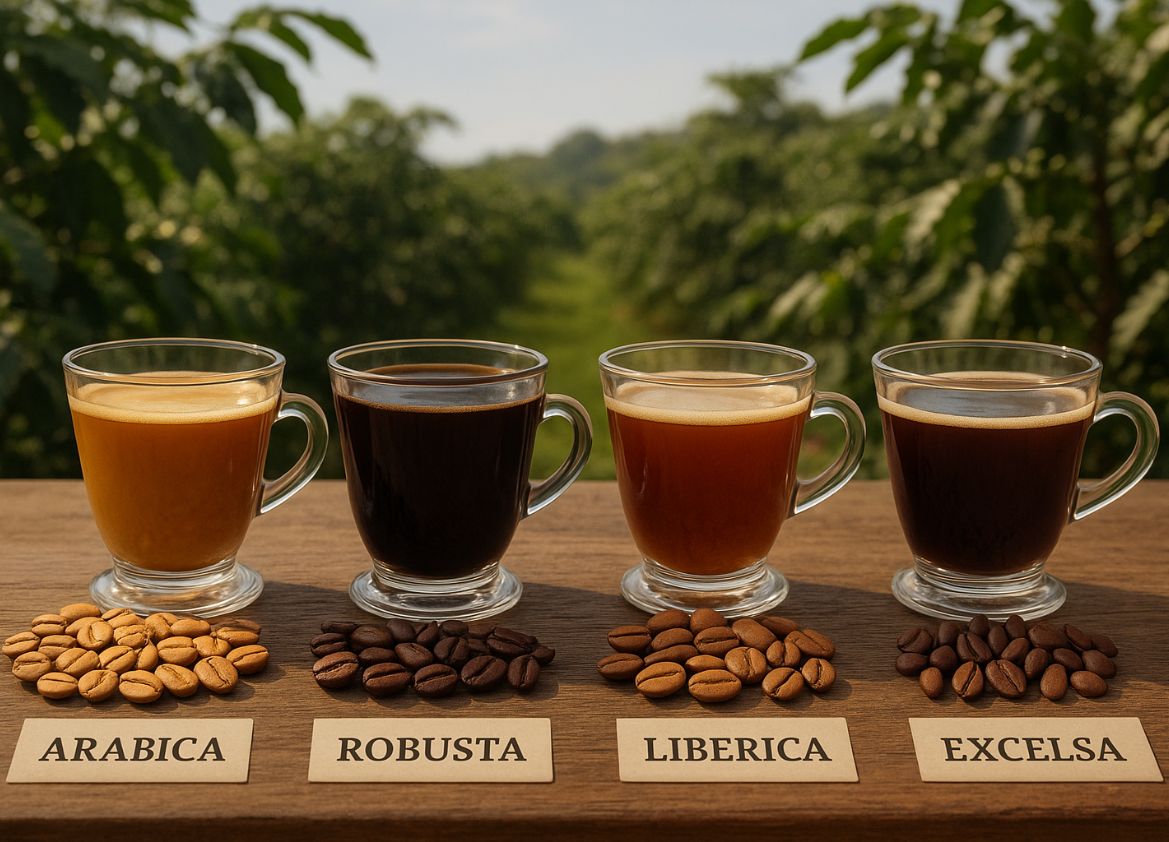
Coffee lovers often ask what are the four types of coffee? when they want to understand the basics of coffee varieties. The answer might surprise you – there are actually four main coffee species, but most people think of coffee types in terms of brewing methods or roast levels. In this comprehensive guide, I’ll break down both perspectives to give you the complete picture of coffee classification.
Whether you’re a beginner looking to expand your coffee knowledge or an entrepreneur planning to enter the coffee business, understanding these fundamental coffee types will help you make better choices and appreciate the complexity behind your daily cup.
Key Takeaways
• Four main coffee species exist: Arabica, Robusta, Liberica, and Excelsa, with Arabica and Robusta dominating 99% of global production • Popular brewing methods include espresso, drip coffee, French press, and cold brew – each creating distinct flavor profiles • Arabica offers superior taste but requires specific growing conditions, while Robusta provides higher caffeine and disease resistance • Roast levels significantly impact flavor – light roasts preserve origin characteristics, dark roasts develop bold, smoky notes • Choosing the right type depends on your taste preferences, caffeine needs, and brewing equipment
Four Coffee Species-What Are the Four Types of Coffee Plants?
When coffee experts discuss what are the four types of coffee, they’re typically referring to the four main coffee plant species that produce the beans we drink. These botanical varieties form the foundation of all coffee production worldwide.
Coffea Arabica- The Premium Choice
Arabica coffee represents approximately 60-70% of global coffee production and is widely considered the highest quality option. This species originated in the Ethiopian highlands and thrives at elevations between 2,000-6,000 feet.
Key characteristics of Arabica:
- Flavor profile: Sweet, soft, and complex with notes ranging from fruity to chocolatey
- Caffeine content: 1.2-1.5% (lower than Robusta)
- Growing conditions: High altitude, cooler temperatures, specific rainfall patterns
- Price point: More expensive due to difficult cultivation requirements
Arabica beans have an oval shape with a curved crease down the center. The plants are more susceptible to diseases and pests, making cultivation challenging but rewarding for quality-focused growers.
Coffea Robusta-The Hardy Alternative
Robusta coffee makes up about 30-40% of global production and lives up to its name with exceptional disease resistance and higher yields. This species grows well at lower altitudes and in harsher conditions than Arabica.
Robusta characteristics:
- Flavor profile: Strong, bitter, with earthy and nutty undertones
- Caffeine content: 2.2-2.7% (nearly double Arabica)
- Growing conditions: Sea level to 2,000 feet, warmer climates
- Price point: More affordable due to easier cultivation
Many coffee blends combine Arabica and Robusta to balance flavor complexity with caffeine strength and cost-effectiveness. Espresso blends often include Robusta for the thick crema it produces.
Coffea Liberica-The Rare Giant
Liberica coffee accounts for less than 2% of global production but offers unique characteristics that coffee enthusiasts appreciate. These beans are significantly larger than Arabica or Robusta and have an irregular shape.
Liberica features:
- Flavor profile: Fruity, floral, with woody and smoky notes
- Bean size: Much larger than other varieties
- Growing regions: Primarily Philippines, Malaysia, and West Africa
- Availability: Limited commercial availability outside origin countries
The Liberica plant can grow much taller than other coffee species, sometimes reaching 60 feet in height. Its distinctive flavor profile makes it popular in specific regional markets.
Coffea Excelsa-The Flavor Enhancer
Excelsa coffee (sometimes classified as a variety of Liberica) contributes unique flavor notes to coffee blends despite representing less than 1% of global production. This species grows primarily in Southeast Asia.
Excelsa characteristics:
- Flavor profile: Tart, fruity, with wine-like acidity
- Usage: Primarily in blends to add complexity
- Growing regions: Vietnam, Philippines, and surrounding areas
- Function: Enhances middle and back notes in coffee blends
Coffee roasters often use small amounts of Excelsa to create more complex flavor profiles in their blends, particularly in medium and dark roast coffees.
Popular Coffee Brewing Methods: What Are the Four Types of Coffee Preparations?
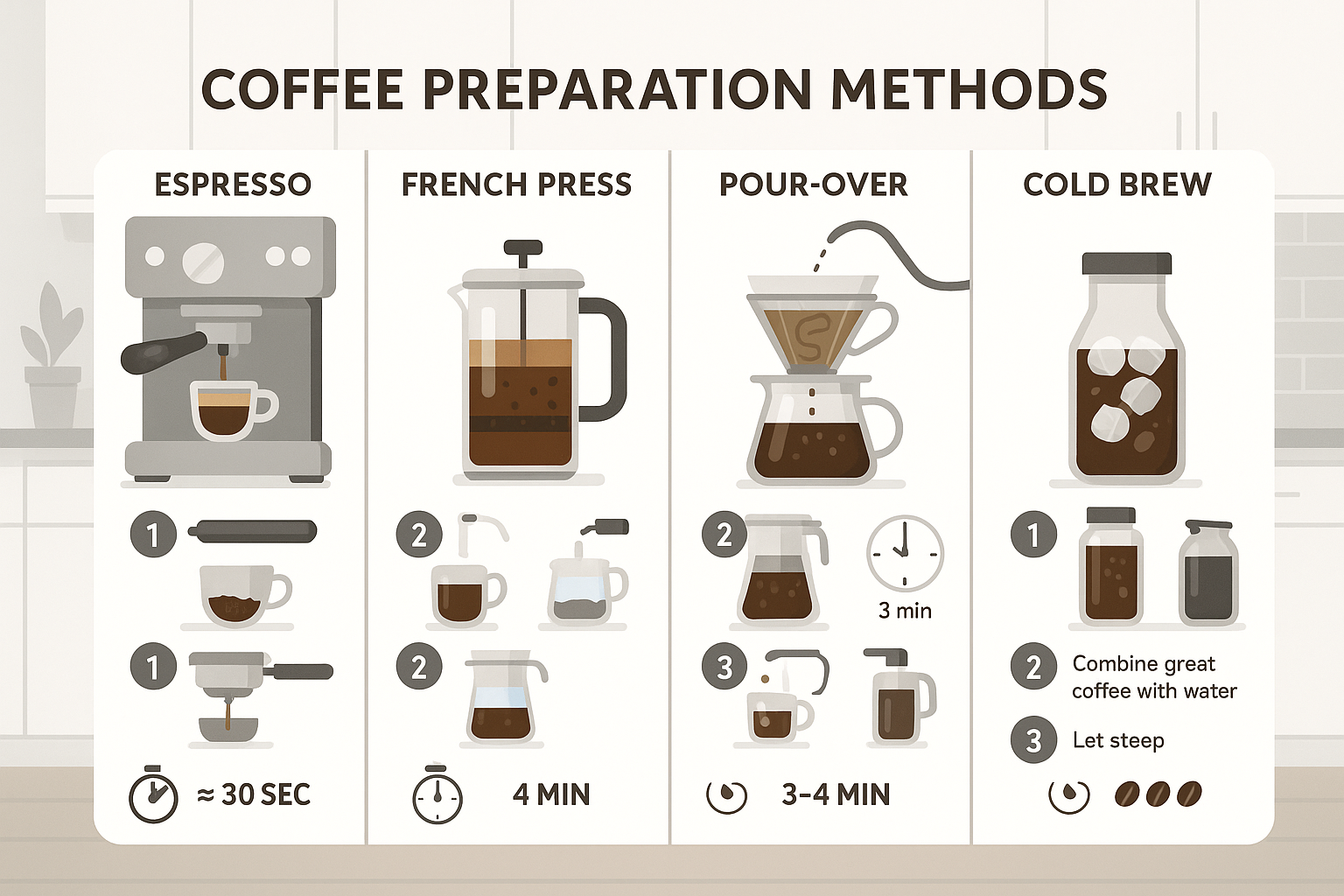
While botanical classification covers coffee species, most consumers think about what are the four types of coffee in terms of how coffee is prepared and served. Here are the four most popular brewing methods that create distinct coffee experiences.
Espresso- The Concentrated Foundation
Espresso forms the base for many coffee drinks and represents the most concentrated brewing method. This Italian-originated technique forces hot water through finely ground coffee under high pressure.
Espresso brewing details:
- Grind size: Very fine, almost powder-like
- Brewing time: 25-30 seconds
- Water temperature: 190-196°F
- Pressure: 9 bars of pressure
- Yield: 1-2 ounces of concentrated coffee
The espresso method extracts maximum flavor and caffeine in minimal time, creating a thick, syrupy consistency topped with golden crema. Quality espresso beans and proper grinding are essential for excellent results.
Popular espresso-based drinks:
- Cappuccino (equal parts espresso, steamed milk, foam)
- Latte (espresso with steamed milk, light foam)
- Americano (espresso diluted with hot water)
- Macchiato (espresso “marked” with a dollop of foam)
Drip Coffee: The American Standard
Drip coffee represents the most common brewing method in American households and offices. This technique involves pouring hot water over medium-ground coffee in a filter, allowing gravity to extract flavors slowly.
Drip coffee specifications:
- Grind size: Medium, resembling coarse sand
- Brewing time: 4-6 minutes
- Water temperature: 195-205°F
- Coffee-to-water ratio: 1:15 to 1:17
- Equipment: Drip coffee makers, pour-over devices
This method produces a clean, balanced cup that highlights the coffee’s natural flavors without overwhelming intensity. The best grind for drip coffee ensures optimal extraction and prevents over or under-brewing.
French Press- The Full Body Experience
French press brewing creates rich, full-bodied coffee by steeping coarse grounds in hot water before separating them with a metal filter. This immersion method allows oils and fine particles to remain in the final cup.
French press process:
- Grind size: Coarse, like breadcrumbs
- Steeping time: 4 minutes
- Water temperature: 200°F
- Plunger action: Slow, steady pressure
- Result: Full-bodied coffee with sediment
The metal filter in French presses allows coffee oils to pass through, creating a heavier mouthfeel and more intense flavor compared to paper-filtered methods. French press coffee beans with bold flavors work particularly well with this brewing style.
Cold Brew-The Smooth Alternative
Cold brew coffee uses time instead of heat to extract flavors, resulting in a smooth, low-acid beverage that’s perfect for hot weather or sensitive stomachs. This method requires advance planning but produces concentrated coffee that stays fresh for days.
Cold brew specifications:
- Grind size: Extra coarse
- Steeping time: 12-24 hours
- Water temperature: Room temperature or cold
- Concentration: Usually diluted before serving
- Storage: Refrigerated for up to two weeks
The extended extraction time at low temperatures reduces acidity and bitterness while maintaining caffeine content. Cold brew coffee beans with chocolate or nutty notes work exceptionally well for this method.
Coffee Roast Levels-How Processing Affects Coffee Types
Understanding roast levels is crucial when exploring what are the four types of coffee from a flavor perspective. The roasting process dramatically transforms green coffee beans, developing the flavors and aromas we associate with different coffee types.
Light Roast-Origin-Forward Flavors
Light roast coffee preserves the original characteristics of the coffee beans, allowing terroir and processing methods to shine through. These roasts stop just after the “first crack” during the roasting process.
Light roast characteristics:
- Color: Light brown, no visible oils
- Flavor: Bright, acidic, floral, fruity
- Caffeine: Highest levels (minimal breakdown)
- Body: Light to medium
- Best for: Pour-over, drip coffee, highlighting origin flavors
Light roasts work exceptionally well with high-quality Arabica beans from specific regions, allowing coffee drinkers to taste the unique characteristics of different growing areas.
Medium Roast-Balanced Complexity
Medium roast coffee balances origin characteristics with developed roast flavors, creating the most popular roast level in American coffee culture. The beans reach temperatures between first and second crack.
Medium roast features:
- Color: Medium brown, slight surface oils
- Flavor: Balanced acidity and body, caramelized sugars
- Caffeine: Moderate levels
- Body: Medium to full
- Best for: Drip coffee, French press, espresso blends
This roast level offers the best of both worlds – origin character and roast development – making it versatile for various brewing methods and taste preferences.
Medium-Dark Roast: Bold Development
Medium-dark roast coffee pushes flavor development further, creating more pronounced roast characteristics while maintaining some origin notes. The beans develop visible oils and reach the beginning of second crack.
Medium-dark roast qualities:
- Color: Dark brown with oil sheen
- Flavor: Lower acidity, more body, chocolate and caramel notes
- Caffeine: Slightly reduced levels
- Body: Full
- Best for: Espresso, French press, milk-based drinks
Dark Roast-Maximum Intensity
Dark roast coffee prioritizes roast character over origin flavors, creating bold, smoky, and sometimes bitter notes. These beans are roasted well into or past second crack.
Dark roast characteristics:
- Color: Very dark brown to black, oily surface
- Flavor: Low acidity, heavy body, smoky, burnt sugar
- Caffeine: Lowest levels (significant breakdown)
- Body: Very full
- Best for: Espresso, milk drinks, French press
Dark roasts work well for coffee drinkers who prefer intense, bold flavors and for drinks that include milk or cream, which can balance the strong roast characteristics.
Choosing the Right Coffee Type for Your Needs
Now that we’ve explored what are the four types of coffee from multiple perspectives, let’s discuss how to choose the best option for your specific needs and preferences.
Consider Your Taste Preferences
Flavor profile preferences should guide your coffee selection:
- Bright and acidic: Choose light roast Arabica beans from African or Central American origins
- Balanced and smooth: Opt for medium roast blends or single-origin South American coffees
- Bold and intense: Select dark roast blends or Robusta-containing espresso blends
- Low acid: Try cold brew or dark roast coffees, which naturally have lower acidity
Match Coffee to Brewing Method
Brewing equipment influences which coffee types work best:
- Espresso machines: Medium to dark roasts, often blends containing some Robusta
- Drip coffee makers: Medium roasts with balanced flavor profiles
- French press: Coarse-ground, full-bodied coffees that can handle immersion brewing
- Cold brew: Coarse-ground, chocolatey or nutty flavor profiles
Understanding caffeine content helps you choose appropriate coffee types for different times of day and personal sensitivity levels.
Budget and Availability Considerations
Economic factors affect coffee selection:
- Premium options: Single-origin Arabica, specialty roasts, small-batch roasters
- Value choices: Arabica-Robusta blends, larger commercial roasters
- Bulk purchasing: Whole bean coffee for better freshness and value
- Convenience: Pre-ground options for immediate use
Health and Dietary Factors
Health considerations may influence your coffee choices:
- Acid sensitivity: Choose dark roasts or cold brew methods
- Caffeine sensitivity: Opt for Arabica over Robusta, or consider decaf options
- Organic preferences: Look for certified organic coffee beans
- Fair trade: Support sustainable farming practices with certified fair trade coffees
Regional Coffee Variations and Specialty Types
Understanding what are the four types of coffee extends beyond basic classifications to include regional variations and specialty processing methods that create unique flavor profiles.
Geographic Influence on Coffee Types
Coffee-growing regions impart distinct characteristics:
African coffees (Ethiopia, Kenya, Rwanda):
- Bright acidity, floral and fruity notes
- Wine-like complexity, berry flavors
- Often processed using washed or natural methods
Central and South American coffees (Colombia, Guatemala, Brazil):
- Balanced acidity and body
- Chocolate, caramel, and nut flavors
- Consistent quality, good for blending
Asian coffees (Indonesia, Vietnam, India):
- Full body, earthy flavors
- Lower acidity, herbal notes
- Unique processing methods like wet-hulling
Specialty Processing Methods
Processing techniques create additional coffee type variations:
Washed (Wet) Processing:
- Clean, bright flavors
- Highlights origin characteristics
- Consistent quality
Natural (Dry) Processing:
- Fruity, wine-like flavors
- Fuller body, more complex
- Weather-dependent quality
Honey Processing:
- Balanced sweetness
- Medium body with fruit notes
- Combines benefits of washed and natural methods
Anaerobic Fermentation:
- Unique, experimental flavors
- Enhanced fruit characteristics
- Limited availability, premium pricing
These processing methods work with the four main coffee species to create hundreds of distinct flavor profiles available to modern coffee drinkers.
Coffee Equipment and Gear Recommendations
Selecting appropriate equipment enhances your ability to enjoy different coffee types and brewing methods effectively.
Essential Brewing Equipment
Basic coffee setup for exploring different types:
- Coffee grinder: Burr grinders provide consistent particle size
- Scale: Accurate measurements ensure reproducible results
- Brewing device: Start with drip coffee makers or pour-over equipment
- Thermometer: Monitor water temperature for optimal extraction
- Storage containers: Airtight containers preserve coffee freshness
Advanced Equipment for Coffee Enthusiasts
Professional-grade tools for serious coffee exploration:
- Espresso machine: For concentrated coffee and milk-based drinks
- French press: Quality French presses for full-body brewing
- Cold brew maker: Specialized equipment for smooth, low-acid coffee
- Multiple grinders: Different grind settings for various brewing methods
Maintenance and Care
Equipment maintenance ensures consistent coffee quality:
- Clean grinders weekly to prevent oil buildup
- Descale espresso machines monthly
- Replace filters regularly in drip coffee makers
- Store equipment in dry, clean environments
Proper equipment care extends the life of your coffee gear and maintains the quality of your daily brew, regardless of which coffee type you prefer.
The Future of Coffee Types and Trends
The coffee industry continues evolving, introducing new varieties and processing methods that expand our understanding of what are the four types of coffee.
Emerging Coffee Varieties
Plant breeding programs develop new coffee cultivars:
- Disease-resistant Arabica varieties
- Climate-change adapted plants
- Enhanced flavor profile developments
- Increased yield potential
Innovative Processing Methods
Modern processing techniques create new flavor possibilities:
- Carbonic maceration (borrowed from wine industry)
- Extended fermentation periods
- Controlled environment processing
- Experimental yeast strains
Sustainability and Ethics
Environmental considerations shape coffee type availability:
- Shade-grown coffee preservation
- Water conservation in processing
- Carbon-neutral shipping and roasting
- Direct trade relationships with farmers
Technology Integration
Digital tools enhance coffee selection and brewing:
- Mobile apps for coffee tracking and recommendations
- Smart brewing equipment with precise controls
- Online cupping and tasting sessions
- Blockchain supply chain transparency
These developments ensure that coffee lovers will continue having new types and experiences to explore while supporting sustainable and ethical coffee production practices.
Conclusion
Understanding what are the four types of coffee provides a solid foundation for exploring the rich world of coffee. Whether you focus on the four main coffee species (Arabica, Robusta, Liberica, and Excelsa), the popular brewing methods (espresso, drip, French press, and cold brew), or the various roast levels, each classification system offers valuable insights for making better coffee choices.
The key to finding your perfect coffee lies in experimentation and understanding how different factors – from bean origin to brewing method – affect the final cup. Start with high-quality Arabica beans in a medium roast, then explore different brewing methods and origins to develop your palate and preferences.
Next steps for your coffee journey
- Try different origins: Sample coffees from various regions to understand terroir effects
- Experiment with brewing methods: Test multiple techniques to find your preferred style
- Invest in quality equipment: Good tools make better coffee and enhance your experience
- Learn about roast dates: Fresh coffee (within 2-4 weeks of roasting) tastes significantly better
- Support sustainable practices: Choose ethically sourced coffee to support farmers and the environment
Visit Drip Coffee Lounge for more detailed guides, equipment reviews, and coffee recommendations to continue your coffee education journey. Whether you’re brewing for personal enjoyment or planning a coffee business, understanding these fundamental coffee types will serve you well in 2025 and beyond.